THE AMERICAN MAGAZINE INTERVIEWS SPRINGWOOD WRITER RICHARD NELSON
Posted on 6 May 2026.
Posted in: Main Stage
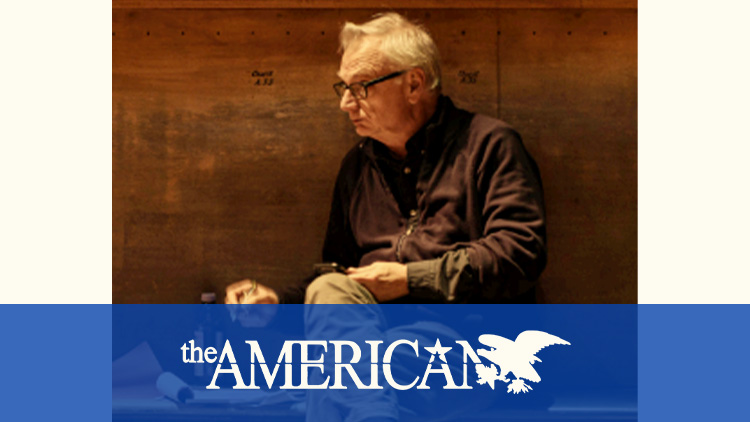
"Springwood is about an awkward, inexperienced, King George VI and Queen Elizabeth thrust into the maelstrom of geopolitics in 1939, to meet President Franklin D Roosevelt in what was to prove a pivotal moment in the 'Special Relationship'. Fast forward to now and the current King and Queen were recently sent on a state visit to the US to act as kind of 'horse whisperers' to the current, quixotic, occupant of the White House. It’s being described as a pivotal moment too, as the UK is being castigated for not being supportive enough in the current war in Iran.
...
Springwood is based on your great 2012 movie Hyde Park on the Hudson; what encouraged you to dramatize it for the stage and in what ways is it different?
Colin Callender, a well-known and highly regarded theater and TV producer, saw the film on an airplane and called me. He said he thought this story would make an interesting play. Before I wrote Hyde Park on Hudson as a film, I’d written the story as a radio play for the BBC. So, to be honest, I wasn’t very keen; and was moving on with other stories. But I met with Colin and he was persuasive. With his help, I rethought the story. Whereas the film is from Daisy Suckley’s (Franklin’s cousin and mistress) point of view, the play would focus on the Royals and Roosevelts and cover just the weekend of the Royal visit and the famous hot dog picnic. The play is quite different than the film, and that made it interesting to write.
Why the change of title?
Hyde Park on Hudson is the name of the town where Roosevelt lived and within which Daisy had her relationship with Franklin. Springwood is the name of Roosevelt’s home in Hyde Park, and the location of the entire play. The play is set in various rooms and locations around the house. The change of title reflects the change of perspective mentioned above. To be clear, Springwood was actually Franklin’s mother’s home; he had a room there. And Eleanor lived in her own home, Val Kil, a few milesaway, with lesbian furniture makers.
You got some criticism for the representation of the cousin/lover Daisy and how much or how little her relationship with FDR mattered vis-à-vis his other mistresses. What are your thoughts on that now?
There were three women at FDR’s bedside when he died: his daughter; the woman he had the affair with which nearly ended his marriage (she was Eleanor’s secretary, and the woman FDR had promised his wife never to see again); and – Daisy. The first presidential library ever created was Franklin’s, at his home in Hyde Park. This was created while he was still alive, and the first head of the library – Daisy. There is only one photo in existence of Roosevelt in a wheelchair, that photo was taken by – Daisy. When Daisy died (she lived in my village of Rhinebeck), a box of letters was discovered under her bed – letters to and from FDR. Their relationship was intimate and meaningful. And important to both of them.
...
This is the world premiere of Springwood; how come you gave it to the Hampstead Theatre instead of somewhere in the United States?
This will be the fourth play of mine produced at Hampstead, so it is certainly not unknown territory to me. Greg Ripley-Duggan (Hampstead Theatre's Producer and Chief Executive) has always been receptive to my work; and when Colin Callender and I thought of where might be the best venue for Springwood, we thought of Hampstead. I'm not sure whether he suggested Hampstead or I did. But it seems to be a very good fit."
Read the full interview or visit The American Magazine website through the links below.
Springwood plays the Main Stage from 19 June to 25 July.